
Your Best City Guide Is Sitting Behind the Front Desk
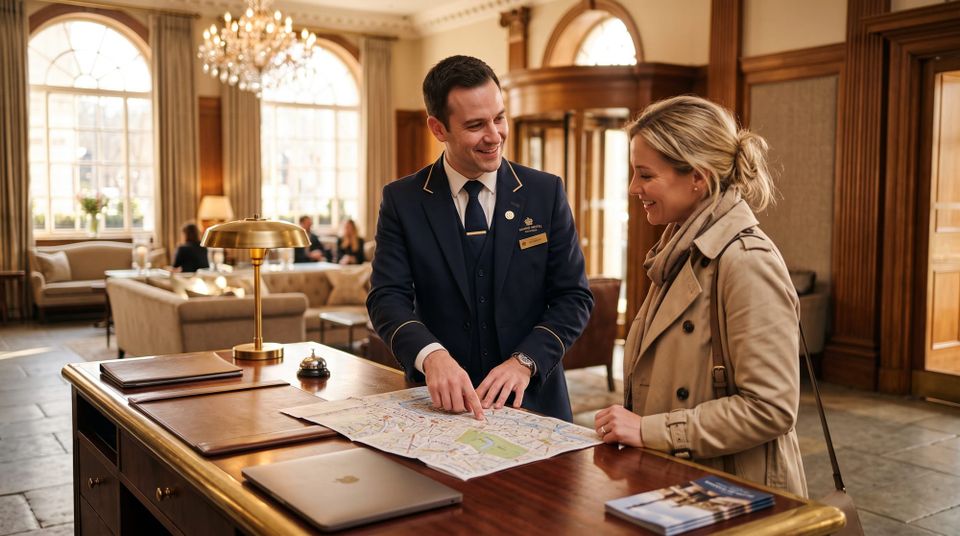
Every hotel marketer eventually hits the same wall. You've said everything there is to say about the property, and now you have to say something about your city. The fix is a local city guide, and the strongest version of it is already on your payroll. Before we get into how to build it, it's worth noting that a very large brand just spent real money proving the format works.
On August 31, Marriott Bonvoy launched 37 player-curated City Guides, one for every U.S. and international city hosting an NFL game this season, with picks from Cooper Kupp, Jordan Mailata, Fred Warner and Todd Gurley. Each guide runs five or six recommendations: a hotel, a coffee shop, a restaurant or two sorted by category, a park or an art gallery. That's it. It's a simple format, and it answers the question a traveling fan is actually typing into Google. Where do I stay, where do I eat, and what do I do between landing and kickoff.
Now the part I don't buy. When a Hall of Fame receiver's preferred hotel in Mexico City turns out to be an airport-adjacent select-service property, somebody in a conference room made that pick. That's how celebrity partnerships work and I'm not mad at it. But it puts a ceiling on how much the reader believes the list, and belief is the entire reason the format works. Which is exactly why your version can beat a nine-figure brand's version.
The city guide doesn't require a celebrity. It requires somebody who actually eats there. We got into this last week with employee-generated content: your comp set can copy your drone footage, they cannot copy your people. Your concierge has been answering "where should we eat tonight" a few dozen times a week for years. That's a city guide. It already exists. It's just sitting behind the desk instead of on your feed.
And don't stop at the concierge. Front desk, bartender, restaurant manager, bellman, director of sales, GM. Everybody has an opinion about where to eat, drink, shop, and kill an hour in their own city. Ask five associates for their favorite taco shop and you'll get five different answers. That variety is the point, not a problem to fix. Nobody is going to wonder whether your bellman really likes the speakeasy he named. He does. He was there Saturday.
Advice to Hotels
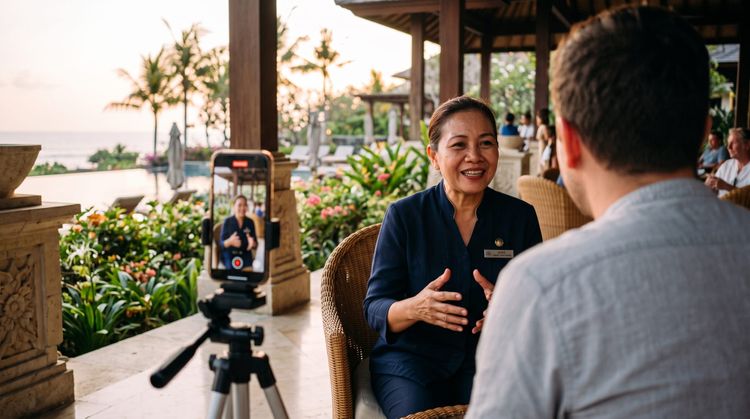
Build a city guide series and cast it entirely from your own payroll. One associate a month gives you twelve guides a year, which is a full content pillar for the cost of an afternoon. Keep the categories fixed so the guides stack up against each other: coffee, breakfast, one dinner worth dressing up for, one dinner under twenty bucks, and one thing to do that isn't on the top-ten list. Five or six picks per person, name and job title on screen, shot in the lobby or out on location, no script and no teleprompter. Publish each one as a carousel and a Reel, then collect all of them on a single page on your site so the front desk has something to point at. This is the kind of content we shoot on property for clients, and it's consistently the cheapest thing on the calendar. Your city is not the backdrop. It's the reason they picked you.
📊 Stat of the Week
That's not a shift, that's a reversal. If your property's Instagram is still functioning as a digital brochure instead of a discovery engine, you're managing the wrong asset. Which is exactly why the city guide format above works. It's not decoration, it's the discovery moment itself, and it's happening on the platform where 61% of your future guests are already looking.
📰 Industry Intel
Google's AI Mode Now Books Your Guests' Rooms For Them
Google launched hotel booking directly inside AI Mode, letting travelers describe what they want in plain English and complete the reservation without leaving the search results. Choice Hotels, Hilton, Marriott, IHG and Wyndham are all in at launch, alongside OTAs like Expedia, Booking.com and Priceline.
Impact on Hotels: This is your answer engine optimization wake-up call. Someone is typing "pet-friendly hotel in Dallas under $200 with a pool" into Google right now, and AI Mode is the thing answering them, not your website copy. If your property's data isn't structured in a way that a language model can parse and trust, you're invisible in that conversation before it even starts. And here's the part that should actually worry you. Google is putting your hotel and the OTA booking your hotel in the exact same interface, side by side, with the same conversational flow. If the experience looks identical either way, price and perks are the only thing left to fight with. Your loyalty points, your direct-booking guarantee, your free breakfast, whatever it is, that has to show up loud and early, because AI Mode just erased the visual distinction between booking with you and booking around you.
Google Pics Wants to Be the Prompt-Based Canva
Google is rolling out Google Pics, a prompt-based image creation and editing tool built into Workspace for Docs and Slides, with Drive coming later. It's powered by Google's Nano Banana model and available to Workspace customers and Google AI Pro or Ultra subscribers. Instead of designing from a template like Canva or Adobe Express, you type what you want and it generates it.
Impact on Hotels: If your marketing team is small and stretched thin, this is worth watching. Internal stuff, menu updates, a quick graphic for a team meeting, a slide deck for ownership, that's where a tool like this earns its keep. Fast, low stakes, nobody's booking a room because of it. Where I'd draw the line is guest-facing content. A prompted image is still a prompted image, and hotel guests can tell the difference between a real property and a generated one faster than you'd think. Use it to save time on the internal grind. Keep the actual guest experience content real.
LinkedIn Users Can Now Flag Your Comments as "AI Slop"
LinkedIn is rolling out its "Seems like AI slop" flag more widely to comments, giving users a direct way to mark replies that look generic, automated, or copy-paste generated. It's not a policy strike, it's a feedback signal that factors into what gets distribution. LinkedIn is specifically calling out comments that add nothing to the conversation, things like "Great insight" or a comment that just restates the original post in different words.
Impact on Hotels: More hotel teams are getting active on LinkedIn, and a lot of that activity is proactive engagement, showing up in other people's threads to build visibility. That's a smart strategy. Having AI write every one of those comments is not. This is a good moment to check your own process. If someone on your team is running comments through AI without reading and editing the output first, LinkedIn just gave every reader a button to call that out publicly. Use AI to tighten up a comment, fine. Don't let it write the whole thing and post it unread.
Facebook Is Splitting Its Professional Dashboard in Two
Facebook relaunched Creator Studio as an AI-powered companion app, and buried in the announcement is a bigger structural change. Up until now, the professional dashboard inside Facebook served creators and businesses with the same one size fits all experience. That's ending. Facebook is splitting it into two separate dashboards, one for creators and one for businesses.
Impact on Hotels: If your team is leveraging the professional dashboard in Meta, you're on the business side of this split, and you may start noticing changes. Time will tell whether the business dashboard keeps the same functionality you're used to or reshuffles it entirely. This is just a heads-up for now. Nothing to act on yet, just something to watch so nobody on your team is confused when the tools they're used to look different.
✈️ What's Happening at Casual Fridays
Different cities, different time zones, same goal. Our latest Reel shows where some of our team is logging in from, all working together to create content that converts for our hotel and resort partners.
Our team wrapped a shoot in Naples, and the photo carousel is worth a swipe. Coastal views, intentionally styled spaces, straight from the camera roll.


Member discussion