
Your Next Guest Might Be an AI Agent. Market to Both.
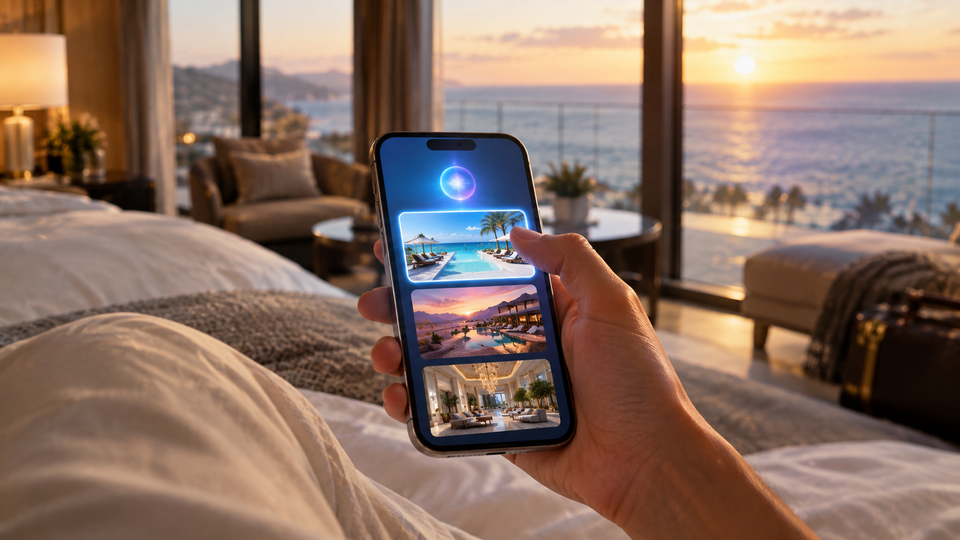
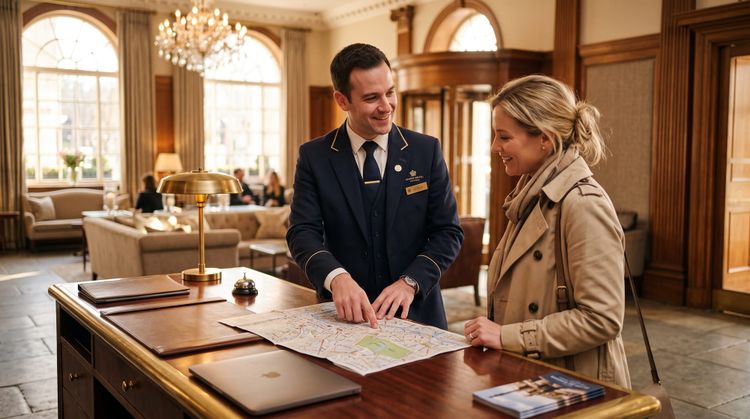
You've spent your whole career learning how to make a person want to stay at your hotel. The sunset shot from the pool deck. The bellman who remembers guests by name.
That still matters. But the person isn't always the one doing the research anymore.
A few weeks ago we covered Meta's launch of Muse, its personal AI agent. Reread it with your hotel hat on. Muse can open a browser, fill out forms, and book travel on a person's behalf, checking with them before it buys. And Meta isn't planning to make money on Muse with ads. Mark Zuckerberg said Meta expects to take a small fee from transactions.
Read that again. The agent helping your guest pick a hotel gets paid when they book. Not when they see your ad.
Why hotels now market to two audiences
Muse is one agent. It isn't the only one.
Google rolled out agentic hotel booking in AI Mode in the US this August, with Marriott, Hilton, IHG, Wyndham, Choice, Booking.com and Expedia as launch partners. Perplexity already books hotels. IHG has an app inside ChatGPT.
The travelers are already there. Phocuswright found that 56% of U.S. travelers used AI on at least one trip in the past year, up from 33% in early 2025. And according to Adobe, AI-referred traffic to U.S. travel sites grew 119% year over year in July. Those visitors now convert almost as well as everyone else.
So you have two audiences. The guest, who still books on feeling. And the agent, which builds the short list on facts.
What the hotel funnel looks like when an agent does the shopping
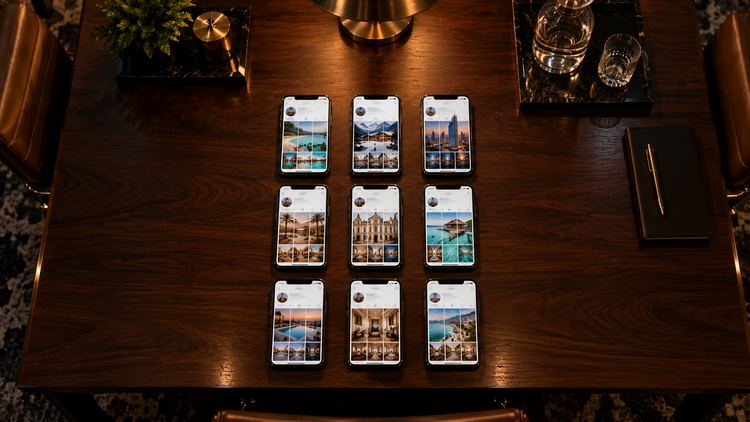
The old path was long. Inspiration on Instagram, a dozen browser tabs, the OTA, brand.com, back to TripAdvisor, maybe a call to the front desk.
The new path is short. The guest tells the agent what they want. The agent researches and comes back with a short list. The guest approves. The agent books.
Most of that happens where no human is looking.
Why the "boring" hotel details now decide the booking
When a guest asks for a dog-friendly resort near Scottsdale with a kids' pool, no resort fee, and a rate under $400, the agent doesn't care about your hero video. It cares whether it can find the answers and trust them.
Pet policy and weight limits. Resort fees and parking, stated plainly. Accessible room types. Outlet hours. Meeting space capacity. If those answers are missing, or they don't match between brand.com, your Google Business Profile, and your OTA listings, you've handed the agent a reason to pick the hotel down the street.
And the agent mostly isn't reading your website. A Cloudbeds study of ChatGPT, Perplexity, and Gemini found OTAs made up 55% of cited sources. Hotel websites were under 14%. Your OTA content, your reviews, and what people say about you on Reddit and YouTube are now marketing copy for a machine.
The big brands see it coming. Hilton and Marriott both flagged AI platforms as a risk to direct bookings in their annual filings this year.
Instagram and TikTok are search engines now, and they read your captions
Social works the same way. Instagram says its search matches what people type against captions, bios, hashtags, and places. TikTok tells creators to use captions, voiceovers, and on-screen text to make clear what a video is about. Public Instagram posts from business accounts now show up in Google, too.
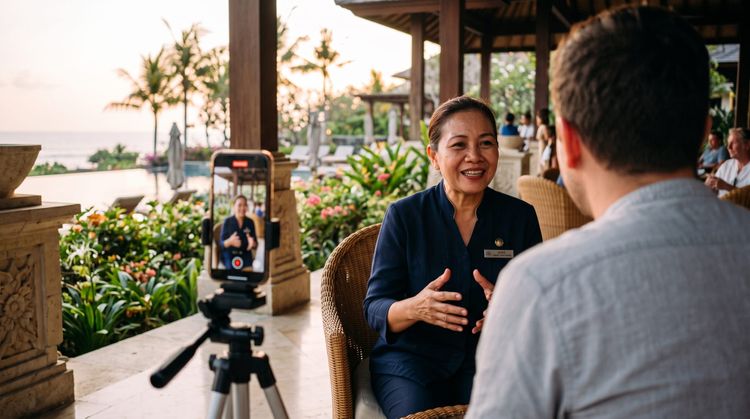
A caption that says "Sunday vibes" tells the algorithm nothing. A Reel where your concierge says "three things to do in Old Town Scottsdale this weekend," with those words on screen and in the caption, tells it exactly who should see it.
Why taste matters more when content gets cheap
Meta is also building AI image generation into its ad tools. One photo becomes a hundred versions. That doesn't make your marketing better. It makes your brief matter more. If the idea is weak, you now have a hundred weak ads.
Your team's job shifts from building every ad to directing them. Someone still owns review, still checks brand standards, still says no. And treat the platform's AI suggestions as things to test, not instructions to follow. The platform makes more money when you spend more. Remember that the next time it suggests raising your budget.
This is also why real people on camera matter more now. An agent can compare your amenities. It can't replace the bartender who's been there 12 years.
We've seen this from the other side
A quick personal note. In our conversations about 2027, a handful of new hotels told us they found Casual Fridays through ChatGPT and Meta AI. No referral, no ad. They asked an assistant, and it named us.
We didn't plan for that. We'd just kept doing the same work we do for our hotels: real associates on camera, with captions, on-screen text, and voiceovers written around what people actually search. Turns out the machines were reading too.
Advice to Hotels
- Ask the agents about yourself. Have someone on your team ask ChatGPT, Gemini, Perplexity, Claude, and Meta AI the questions your guests ask, like "best pet-friendly resort in [your market]." Note who comes up and what's wrong. Do it monthly against your comp set.
- Fix the facts before the photos. Audit brand.com, Google Business Profile, your OTA listings, and TripAdvisor for pet policy, fees, parking, accessibility, outlet hours, and meeting specs. They should all say the same thing.
- Build an FAQ page that answers like your best front desk agent. Plain questions, plain answers, kept current.
- Treat reviews as distribution. Respond with specifics, and encourage happy guests to mention what they loved by name.
- Write social for search. Every Reel and TikTok should name the place, the thing, and the reason, in the caption, on screen, and out loud.
- Put your people on camera. It's the one thing no agent can generate.
The guest still decides. But more and more, an agent decides who makes the list. Market to both. This is no longer optional.
📊 Stat of the Week
This isn't early adopters anymore. Every generation posted double-digit gains in just six months, and guests aren't stopping at booking. They're asking AI where to eat and what to do after they check in, so the answers your concierge gives every day need to live somewhere a machine can find them.
📰 Industry Intel
ChatGPT Is Testing Image Ads and Better Measurement
OpenAI will start testing image ads in ChatGPT in the U.S. later this month, and it's adding measurement integrations with partners like Kochava so advertisers can track results beyond the last click, Digiday reports. Until now, ChatGPT ads have used a simple format built mostly around a headline and description.
Impact on Hotels: Booking a room is a visual decision, so image ads are a big upgrade for hotels on ChatGPT. Most hotels haven't really tried advertising there yet, even with OpenAI openly pushing smaller businesses to give the platform a shot. A format that finally lets you show the room, the pool, and the view might be what gets hotels to take it seriously. If you've been waiting for a reason to test ChatGPT ads, this is it.
TikTok Brings Its Ad Network to the U.S. and Doubles Down on In-App Shopping
TikTok is opening its ad network to U.S. brands for the first time, letting advertisers run campaigns across roughly 400,000 third-party apps, and it’s adding AI tools like a conversational Shopping Assistant and Buy Direct so users can purchase without leaving the app.
Impact on Hotels: TikTok doesn’t want to be where people find things anymore. It wants to be where they buy them. We already saw this earlier in the year with TikTok Go, which lets travelers book hotels right from the app through Booking.com and Expedia. Now U.S. hotels get even more reach, with ads that can run across more than 400,000 partner apps from the same Ads Manager. If TikTok isn’t part of your paid strategy yet, the gap between seeing your hotel and booking it just got a lot shorter.
Google Calls Fact-Checking AI Content “Critical”
Google updated its search guidance on generative AI content to say it’s critical to manually fact-check and review everything AI writes before it goes live, since these models predict words rather than retrieve facts. The update lands while Google’s September 2026 spam update is still rolling out.
Impact on Hotels: Google doesn’t use the word “critical” casually, and you shouldn’t read it that way either. If your team uses AI to write room descriptions, blog posts, or FAQ pages for your website, someone needs to check every fact before it publishes. One wrong pet policy or made-up amenity can create a bad guest experience, and getting on the wrong side of Google increases your operational and SEO risk. Use AI to speed up the draft, not to skip the review
Instagram Now Lets You Boost a Live Video as an Ad
Instagram lets you turn a live stream into an ad that shows in Feed, Stories, and Reels, but only while you’re broadcasting. You can boost right before going live or schedule it ahead, and Instagram recommends setting it up at least two hours early to avoid delivery delays.
Impact on Hotels: Instagram Live had its moment about six or seven years ago, and most hotels probably haven’t touched it since. But if you’ve got something cool happening on property, like a chef’s table, a rooftop concert, or a holiday tree lighting, you can now put paid reach behind it while it’s actually happening. It’s a fresh ad format with a built-in sense of urgency, because the ad disappears the moment you stop streaming. We’re keeping a close eye on this one.
✈️ What's Happening at Casual Fridays
One of our California partners just shared what it's been like working with us, and we're stoked about it. They called out the unique angles in our content and how quick and snappy the Reels feel. Watch the testimonial on Instagram.
Our team just wrapped a client shoot in New Orleans built around the ultimate girls trip: game day jerseys, a charcuterie board, and a champagne toast in bed. Every frame was designed to show future guests exactly how fun a weekend here can be. Swipe through the carousel on Instagram.

Member discussion