
How Hotels Build Guest Trust When AI Can Fake Anything
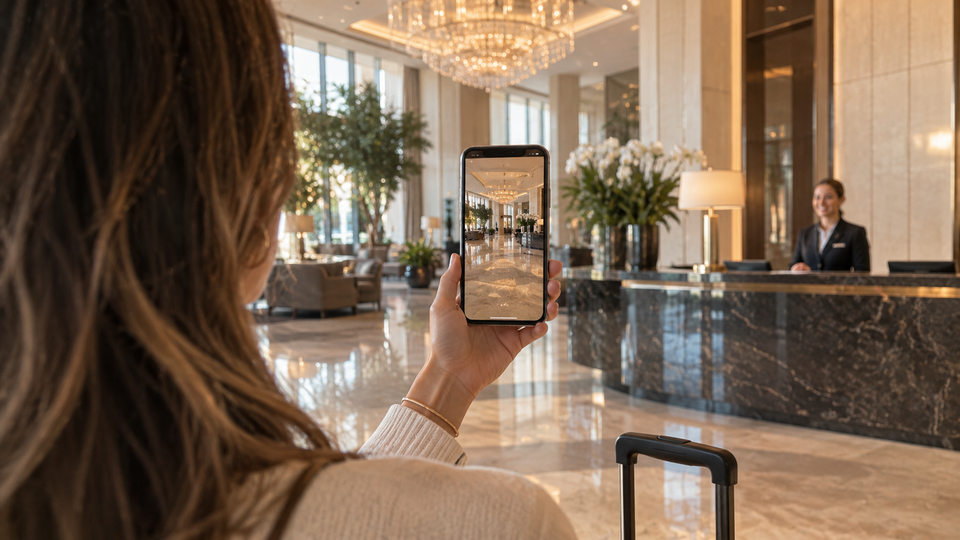
AI now writes captions, generates lifestyle photos, and produces a hundred ad variations in an afternoon. Soon every hotel will look flawless online. Once every property looks flawless, polish stops persuading anyone. Travelers want to know whether your feed matches the stay they’ll get.
Why does trust matter more in hotel marketing as AI creates more content?
Trust matters more because AI makes polished content cheap and fast, so polish alone no longer convinces a traveler to book. Every booking decision rests on trust. Even the best photography in your comp set won’t sell a room to a traveler who doesn’t believe the photos.
The real test comes at check-in. When the property in front of a guest doesn’t match your Instagram, you lose the guest and hand them a reason to write a bad review. Every future guest reading your reviews sees the gap too.
How does editing out property flaws break guest trust?
Editing out a flaw your guests will see in person sets an expectation you won’t meet. We run into this at Casual Fridays all the time. We deliver a set of assets, and a client flags a few as unusable because of a flaw in the shot, even though the flaw sits there 99% of the time. Your guests still see the flaw on arrival, and now they feel misled.
Views get the same treatment. One client asked us to Photoshop a competitor’s building out of a skyline shot. We're fine with blurring a competitor’s logo. Deleting a building every guest sees from the window misrepresents your view, and guests notice the second they open the curtains.
Should hotels recommend restaurants outside the property?
Yes, hotels should recommend outside restaurants, because the destination is part of why guests booked you. Some properties stay quiet about nearby restaurants out of fear of losing covers in their own outlets. Your guests chose your neighborhood and the food scene around you as much as your rooms.
Promote your F&B, and promote the taco spot locals love down the street. A hotel that gives honest restaurant tips earns trust when the same hotel says the rooftop bar is worth a night.
When should hotels use AI-generated images?
Use AI-generated images when the real version costs too much to stage, and label every one. Take ballroom photography. If your shots show an empty room, staging a full event for a photo shoot drains your events team’s time and your budget. A labeled AI image showing how groups use the space works fine. Guests already understand renovation renderings, and a labeled event image follows the same logic.
Trust breaks when AI puts fake guests by your pool in every post or turns your property into something you don’t offer.
How do hotels use associates to build trust on social media?
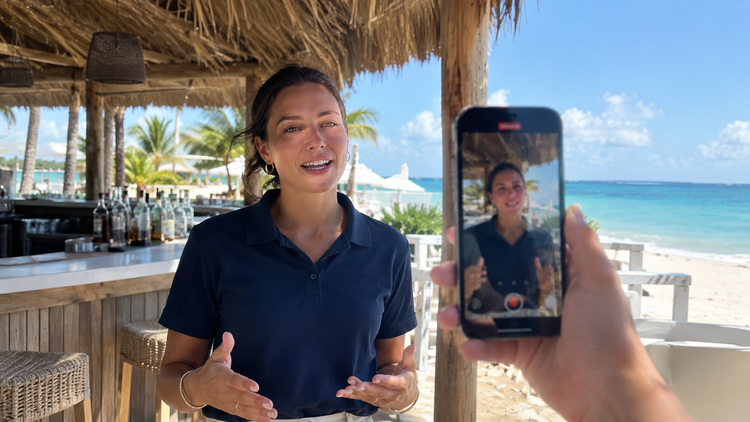
Put real associates on camera answering the everyday questions guests ask. At Casual Fridays, every Content Visit and Signature Content Library shoot now includes time with associates. We ask things like “What should I do in town?” and “What’s your favorite spot on property?”
Ask five associates and you’ll hear five different answers. The variety is why people believe the content. Travelers trust a front desk agent’s favorite brunch spot more than any line in your brand guidelines.
Some associates tell us they’ll freeze on camera. We tell them to skip the script and answer the way they’d answer a friend texting for trip ideas.
What should hotels do differently starting now?
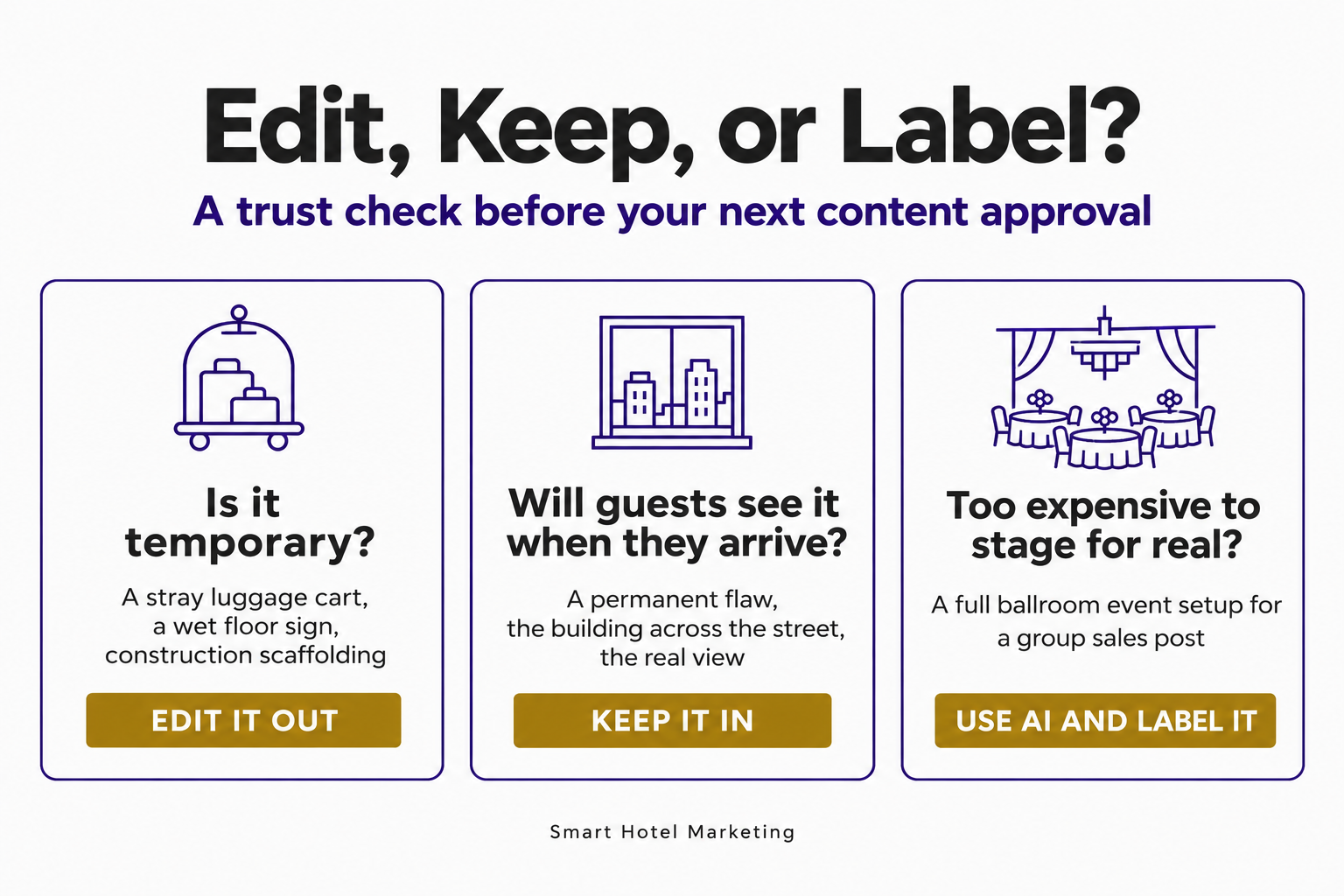
Before you reject an asset for a flaw, ask whether guests will see the flaw when they arrive. If they will, run the shot. Leave the skyline alone. Put associates on camera, give them real guest questions, and let their answers disagree. Save AI for spaces you won’t stage in real life, label every image, and keep the rest of your feed true to the hotel guests walk into.
📊 Stat of the Week
Your next guest might ask AI where to stay, but most of them will go check the answer before they book. That check lands on your reviews and your feed. If your feed shows a skyline guests won’t see from the window, the double-check is where you lose the booking.
📰 Industry Intel
Instagram Brings Its Edits App to Mac With a Free Desktop Editor
Instagram launched a desktop version of Edits for Mac, adding a multi-track timeline, color grading, custom LUT and font imports, and 4K exports with no watermark. Creators can post straight from the desktop editor to Instagram with tagging, location, and trial reels built in.
Impact on Hotels: If your property runs social with a small marketing team that still cuts Reels in CapCut, this one is worth a look. Edits now lets you edit on a bigger screen and publish to Instagram from the same app, without exporting and re-uploading in between. It only runs on Mac for now, and Instagram says it will ship updates every week, so keep an eye on what gets added next.
YouTube Adds Seasons and Episodes to Shorts as Microdramas Pass 6.5 Billion Views
YouTube says microdramas on Shorts topped 6.5 billion views in the first half of 2026, with watch time up more than 50% year over year. Its new Shorts series feature lets creators organize Shorts into seasons and episodes, with custom thumbnails and sequential playback so viewers roll straight into the next one.
Impact on Hotels: Instagram has been pushing in this direction, and now YouTube is building the tools to match. Both platforms want people to keep watching, so a series viewers keep coming back to will outlast a one-off video. For a hotel, that could be a new associate’s first week told across five episodes, or your chef building a seasonal menu one dish at a time. YouTube also reports that 40% of views on these videos came more than 30 days after posting, so Episode 1 keeps bringing in viewers well after launch.
TikTok Launches Must Eat, a Restaurant Guide Ranked by 40 Million Posts
TikTok introduced Must Eat, a restaurant guide inside TikTok GO that ranks spots around New York City, Los Angeles and the Bay Area into Everyday Eats and Elevated Dining, built from more than 40 million posts, reviews and comments. No restaurant can pay to be featured, and select listings can be booked directly in the app through OpenTable.
Impact on Hotels: Most hotel restaurants still live as an amenity buried in the property’s social accounts, and Must Eat turns that into a real disadvantage. Since nobody can pay their way onto the list, your restaurant only lands in Elevated Dining if TikTok’s food community is already filming it and talking about it. That means putting your chef and your signature dishes on camera. If your property is around New York, Los Angeles or the Bay Area, partner with local food creators now, especially if your restaurant is on OpenTable, since select listings can be booked right inside TikTok.
Meta’s Average Ad Price Jumps 14% as Partnership Ads Nearly Double
Meta reported $64.6 billion in Q3 revenue, up 26% year over year, driven by a 10% increase in ad impressions and a 14% jump in the global average price per ad. Nearly 10 million advertisers used Meta’s generative AI creative tools during the quarter, and creator Partnership Ads grew more than 97%.
Impact on Hotels: With the average Meta ad costing 14% more, broad awareness campaigns eat into your return on ad spend faster than they used to. Move more budget toward retargeting people who already visited your site or searched your dates, where intent is high and every direct booking protects your margin. Use Meta’s AI tools to produce and test creative quickly, and run Partnership Ads to turn content from creator stays into paid media that actually converts.
Meta Now Lets Advertisers Set an Age and Gender for Each Ad Creative
Meta is rolling out a feature that lets advertisers choose an audience for each ad creative, setting an age and gender for each image or video inside a single ad set. Meta treats the setting as a suggestion, so an ad can still reach people outside that group if the system thinks they’re likely to respond.
Impact on Hotels: Hotels sell to very different guests, and now one ad set can speak to all of them. Point your family pool and kids’ club video at parents, and send the spa and wine dinner creative to an older audience, without splitting your budget across separate ad sets. Meta still makes the final call on who sees what, so check your results by age before you assume the split worked.
✈️ What's Happening at Casual Fridays
Our November Trend Report pulls together five content ideas hotels and resorts can run this month, including one built around your F&B outlets, with notes on how to make each idea fit your own property. Swipe through the full report on Instagram and save it for your content calendar.
Long Beach was the stop for our latest Content Visit, and the carousel opens with a room overlooking the harbor. Swipe through the rest of the visit on Instagram.


Member discussion