
Instagram Told Us How It Ranks Content. Most Hotel Feeds Are Ignoring It.
If your hotel's feed is a steady rotation of slow pans across the pool, drone shots of the coastline, and captions like "Your view awaits," you're in good company. That's the issue. Almost every upscale hotel on Instagram looks like that right now, and Instagram just explained, in plain language, why that content isn't getting reach.
In September, Adam Mosseri, the head of Instagram, posted a four-part video series on how and why Instagram ranks content. You can watch Part 1 here, and the rest are on his account. None of it is a secret formula. But it's the clearest on-the-record explanation we've had in years. Read it as a hotel marketer, and it lands as a pretty direct critique of how most properties are still posting.
How Does Instagram Decide What Content to Show?
Mosseri's first point is that no single algorithm exists. Feed, Stories, Reels, and Explore each rank content differently. Each format also delivers two distinct types of content: posts from your established network and external recommendations.
The logic underneath is simple. Instagram looks at what you've done on the app and predicts how likely you are to like a post, comment, send it to a friend, or watch a video to the end. Each prediction becomes a relevancy score, and posts get ordered by that score. Recency matters a lot, so feeds stay roughly chronological, but not strictly.
What this means for hotels: Instagram isn't judging whether your post is pretty. It's predicting whether a specific person will do something with it. A gorgeous sunset that nobody sends, saves, or watches to the end is, as far as the system is concerned, a post nobody wanted.
What Are Instagram's Content Principles?
In Part 2, Mosseri laid out four principles Instagram uses beyond those engagement predictions. Three of them matter for hotels. The fourth, model size, is about Instagram's AI getting smarter, and you can't do anything about it.
Originality
Instagram wants the person who made the content to get the reach, not the account that reposted it. That isn't new, but they're enforcing it harder. In April, Instagram extended its originality rules to photos and carousels, not just Reels. If most of what an account posts is someone else's content, that account becomes ineligible for recommendations. That means no reach to people who don't already follow you.
Recency
Instagram wants to reflect what's happening now. Mosseri said the company has worked to shrink the lag between something happening in the world and showing up in feeds. For a hotel, that's an open invitation. What's happening at your property this week? In your destination? The festival in town, the first cold morning on the patio, the chef testing a new menu item. Shoot it while it's happening.
Breaking Content
This is the one hotels should be most encouraged by. Instagram deliberately "auditions" content from public accounts to small groups of people who don't follow them. If a post outperforms what Instagram expected, it gets shown again, and again, and it can reach hundreds of thousands of people.
You don't need a massive following to get massive reach. But you only get the audition once per post, and that first test group decides whether it goes anywhere.
Why Don't Promotional Hotel Posts Perform Organically?
Here's a real caption from a high-performing resort's organic post. We're not naming the property because we've written captions like this ourselves when clients asked. Paraphrased: "more room to unwind and reconnect, upgraded rooms with spacious living areas, thoughtful in-room amenities, curated floral arrangements to make your stay special, and a link to reserve."
Now picture that post going out to its audition group of strangers. Who sends it to a friend? Who watches to the end? Who stops at all? That caption could belong to any hotel in any city on the planet, and the people in that test group can tell.
To be clear, Instagram hasn't said it penalizes promotional content. It doesn't need to. The system rewards what people interact with, and almost nobody interacts with an offer they didn't ask for. Nobody has ever sent their best friend a room upgrade package.
That's the old-school thinking we still run into constantly. Hotels treat organic social like a free billboard for packages and offers. Instagram has been pretty clear about where that content belongs: in ads.
As we covered last week, Meta now charges for links inside organic posts. Meta One's Advanced tier, at $49.99 a month in the US, lets you add links to up to four posts and four Reels each month. Even the "organic" route to a booking link runs through a paywall. Promote your offers. Just pay to do it, and save your organic feed for content people actually want.
Does Reposting UGC Still Work on Instagram?
Not the way most hotels have been doing it. Downloading a guest's or creator's photo and posting it as your own is exactly the behavior Instagram is now filtering out of recommendations. Those days are done.
That doesn't mean creator content is off the table. It means using the tools Instagram built for it:
- Collab posts with creators who visit your property, so the content lives on both accounts and credit goes to the person who made it.
- The Repost button for guest and creator content you love. It credits the original creator, and Mosseri has specifically pointed to it as the right way to share someone else's work.
- Remix, when you want to add your own take to someone else's Reel.
This is a big part of why we've shifted our own focus from user-generated content toward content we create on property, built around the people who work there.
What Does Original Hotel Content Look Like?
It's not more polish. Mosseri's principles all point the same direction: original, current, and interesting to someone who has never heard of your hotel.
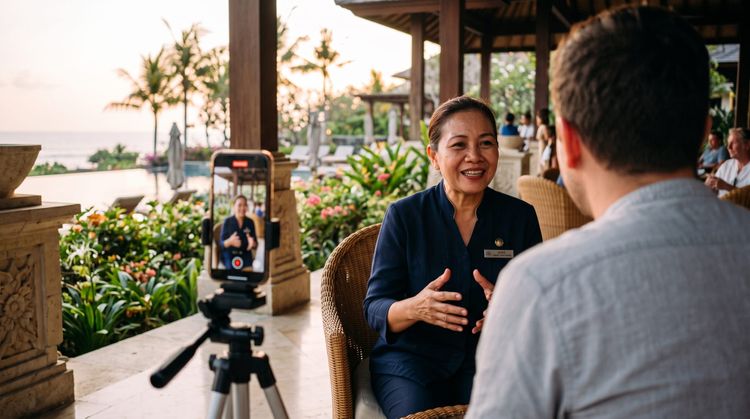
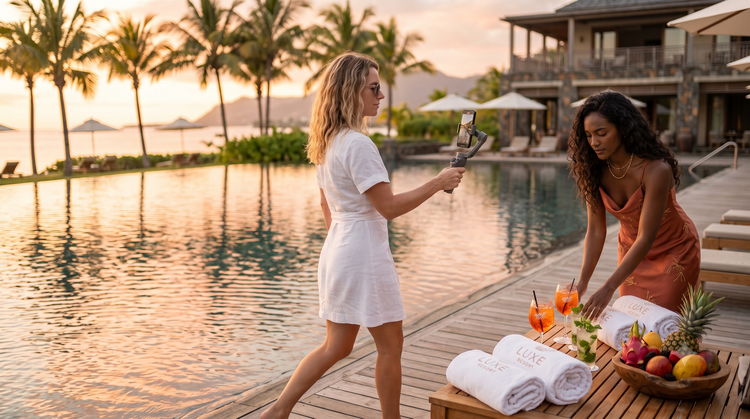
We tested this with our own clients. On content visits where we were still shooting the photo and video each resort needed, we also pointed the camera at their associates. A real person, a real question, their own answer. Still shot well. Never trying to look like an ad. Here's what happened at three resorts:
- Resort one: 400+ organic interactions, the highest on the account, plus 100+ comments.
- Resort two: 206 interactions against an account average of 58.
- Resort three: 14,933 organic views, in the top 20% of the account's all-time posts, and more than 10 hours of total watch time. Only a paid ad beat that.
Three properties, three markets, three audiences, same pattern. That's not a lucky post. That's a format. And it lines up with exactly what Mosseri described: content people watch to the end, comment on, and pass along, because it shows them something they can't get from every other hotel feed.
How Should Hotels Measure Instagram Performance?
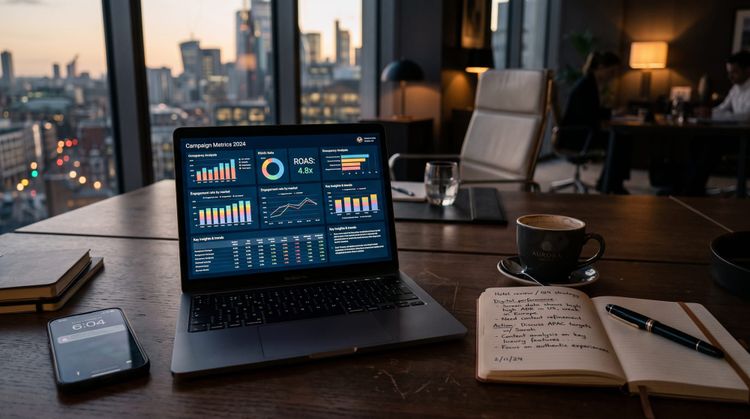
Mosseri's advice to creators applies just as much to hotel marketers. Stop looking at total views and likes, and look at rates. Of everyone who saw a post, what percentage liked it, sent it, or watched to the end? Rates tell you why one post beat another. Totals mostly tell you how many followers you have.
He also told creators to keep experimenting. What works today might not work in a year. Trial Reels are built for this. They're shown to non-followers first, so you can test a new format without your main feed taking the hit.
Before anything goes out, run it past three questions:
- Would someone who's never heard of your hotel want to watch this?
- Would it entertain them?
- Would it help them?
If the answer to all three is no, it's probably an ad. Run it as one.
Advice to Hotels
Move your packages and offers into paid, and give your organic feed back to content people would choose to watch. Make originality the rule: shoot your own content, and use Collabs and the Repost button for anything a guest or creator made. Put your people on camera and tie content to what's happening at your property and in your destination right now. Then judge it by rates, not totals.
We've been doing social for hotels for over 15 years, and Instagram has never been this direct about what it rewards. The properties that listen will get the reach. The ones posting "Your view awaits" will keep wondering where it went.
For hotels, this is the case for getting your General Manager, your Director of Sales and Marketing, and yes, some team members on LinkedIn talking like humans. AI tools are pulling answers from real people sharing real experience, not from polished company pages. If nobody at your property has a real voice on LinkedIn, that's expertise going unclaimed while AI tools cite someone else's.
📰 Industry Intel
YouTube Lets Viewers Build Their Own Feeds With AI Prompts
YouTube announced custom feeds, a Gemini-powered feature that lets viewers describe in their own words the kinds of videos they want recommended, and the resulting feed gets pinned as its own tab on their home page. It doesn't replace the main feed, and support for multiple custom feeds starts rolling out on web and mobile next month.
Impact on Hotels: If your hotel is still treating YouTube as an afterthought, this is another reason to stop. YouTube is already one of the biggest search engines out there, and its content is increasingly showing up in AI answers. Now picture a traveler typing "inspire my next beach vacation" or "show me what to do in Charleston" into a prompt box and getting a feed built around that request. Those feeds are going to fill up with travel content, and the properties actively posting on YouTube are the ones that have a shot at being in them.
YouTube Brings Shorts Series With Seasons and Episodes to Every Screen
At Made On YouTube, the company introduced Shorts series, which lets creators organize Shorts into seasons and episodes, with custom thumbnails and sequential playback so viewers can keep watching from one episode to the next. It's rolling out now across web, mobile, and TV, and YouTube says microdramas alone passed 6.5 billion views on the platform in the first half of 2026.
Impact on Hotels: We've been talking about series formats coming to Instagram and TikTok, and now YouTube is following along. Hotels have had a lot of success with aspirational Reels, but the next step is content people want to come back for. Think recurring episodes with the same associate, the same format, and a reason to see what happens next. And if you're already building a series for Instagram, you can repurpose it straight into YouTube Shorts, as long as your hotel is actually on YouTube.
LinkedIn Tests Splitting the Feed Into "For You" and "Network" Tabs
LinkedIn is testing a new design at the top of the feed with two tabs: Network, for the people you've connected with or followed, and For You, which surfaces posts from practitioners inside and outside your network. It's still a test, with more changes promised.
Impact on Hotels: Expect this to go mainstream. We've been talking about how social media isn't really social anymore. It's interest media, and LinkedIn is now lining up with Instagram, Facebook, and TikTok. Based on what's been shared so far, For You looks like it'll be the primary feed, with Network as the place you go to see only your connections. That means posts from your General Manager and sales team can reach people who've never connected with them, as long as what they're posting is worth someone's time.
Facebook Limits Some Business Pages to Two Link Posts a Month
After Meta One for Business launched its paid subscription packages, a range of Facebook Page managers reported a pop-up alert limiting them to two link posts per month unless they subscribe. Meta first tested this restriction in December 2025 and hasn't formally announced the expansion, and publisher Pages like news outlets are exempt.
Impact on Hotels: We talked about Meta One for Business last week, and this looks like Meta pushing more Pages toward it. The bigger point ties back to our lead story. Organically, people don't want to be sold to, on Facebook or anywhere else, and Meta's own Widely Viewed Content report shows 98.7% of U.S. post views in Q1 2026 didn't include an outside link. Your organic posts need to inform, entertain, or help. When you need to drive someone to a booking page or a package offer, that's what Meta One and paid ads are for.
✈️ What's Happening at Casual Fridays
This San Francisco destination reel was built on a clear playbook: local storytelling, a hook that lands in the first two seconds, and aspirational B-roll that sells the vibe without feeling like an ad. If your property has a defining season or setting, that's your format. See the reel on Instagram.
This one's a good reminder that the photos from a single lifestyle shoot don't have to stop at the original assets. Pull stills from the shoot and they can turn into their own standalone posts, carousels, or story content. This one also plays with the AirDrop trend, using the familiar share pop-up as a hook before revealing the shot. One visit, multiple pieces of content, and a format worth stealing. Check it out on Instagram.


Member discussion